How To Spot Quality Fabric When Shopping: 5 Outfits That Prove You’ve Got The Eye
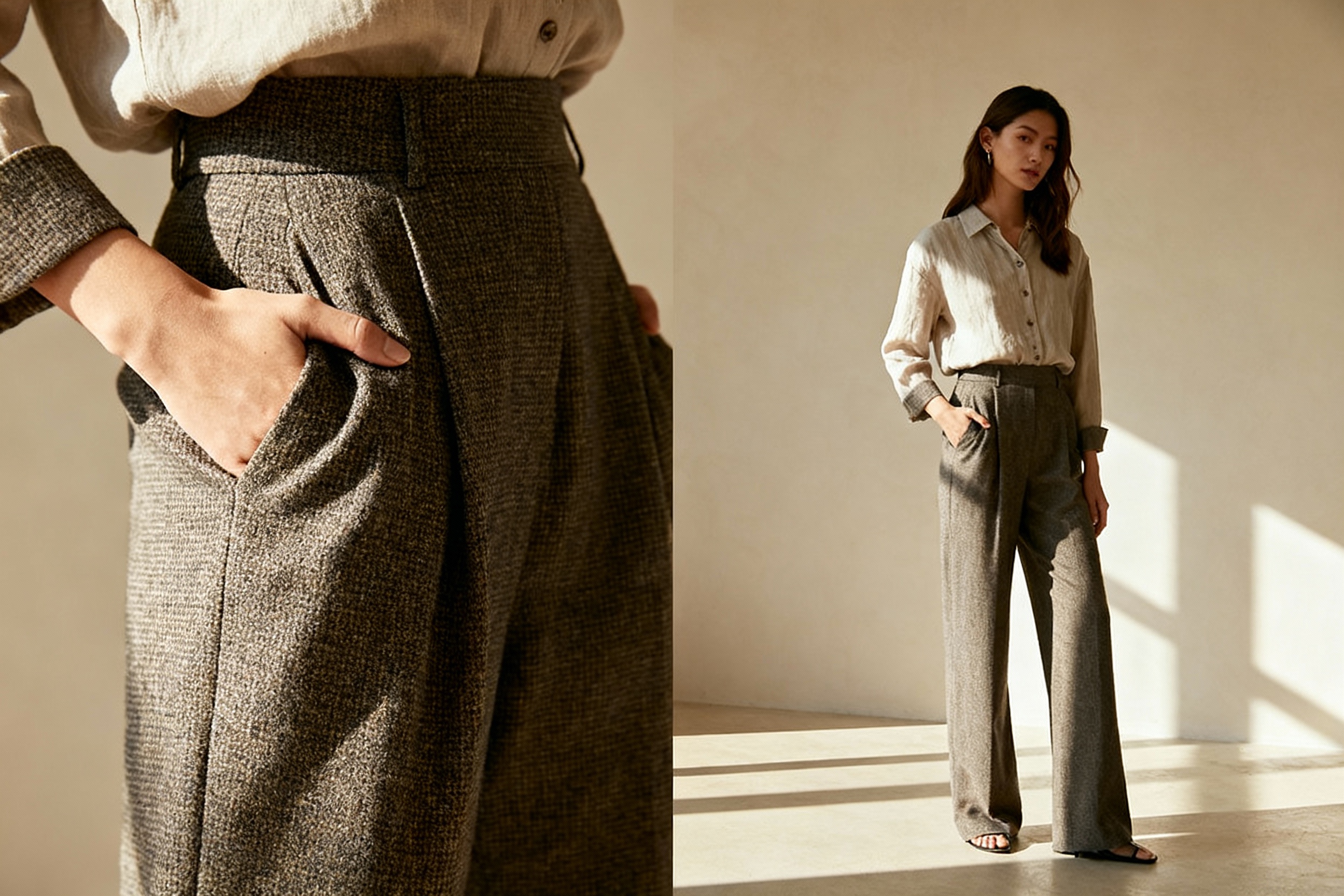
Ever touched a dress that looked great on the hanger, then felt scratchy, thin, and just… cheap? Yeah, we’ve all been there. The secret to clothes that look expensive, drape beautifully, and last beyond one wash isn’t magic—it’s fabric. Today, we’re turning the racks into your playground. I’m walking you through how to spot quality fabric when shopping, and we’re doing it through five killer outfits that showcase exactly what to look for. Trust me, once you start noticing fiber content, texture, weave, and finishing, you’ll never get duped again.
1. The City-Chic Trench and Trousers
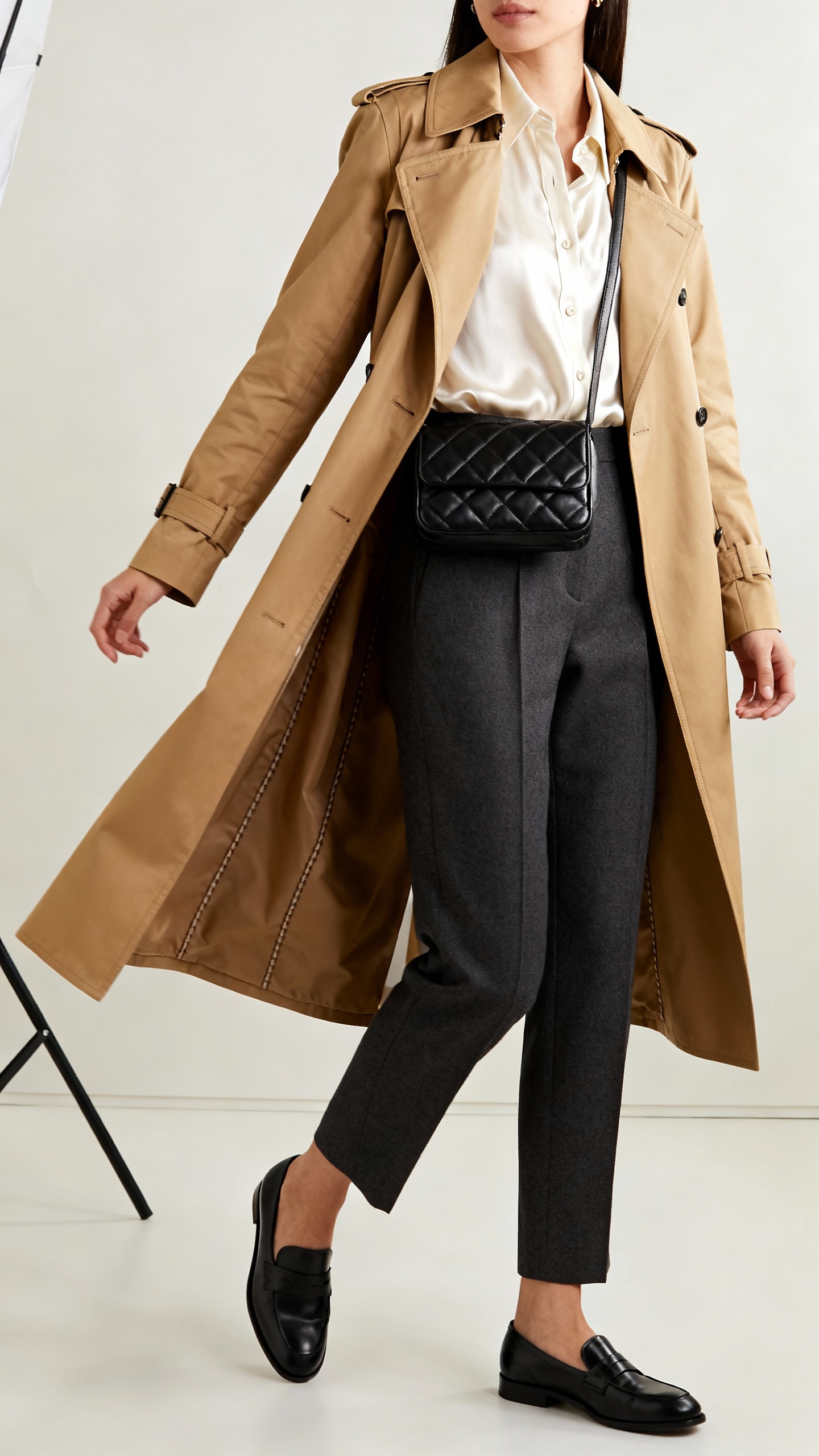
This outfit is the ultimate downtown uniform—clean lines, elegant movement, and major “I’ve got my life together” energy. It’s also a masterclass in recognizing sturdy, structured, breathable fabrics that don’t wrinkle into oblivion. A quality trench and tailored trousers are capsule-wardrobe heroes, and the right fabric can make them look designer-level even if they’re not.
Outfit Pieces:
- Cotton-gabardine trench coat with a smooth twill weave
- High-waisted wool-blend trousers with a soft hand-feel
- Silk or silk-blend button-up blouse
- Leather loafers or sleek ankle boots
- Structured crossbody bag in pebbled leather
Styling Tips:
- When trying on the trench, gently pinch the fabric. Good cotton gabardine has a tight, diagonal twill that springs back and feels substantial—not flimsy or papery.
- Hold the trousers to the light. If you can see through, skip them. Quality wool blends should be opaque, with a slight drape and no itchy feeling on the skin.
- Check the blouse by scrunching a sleeve in your hand for five seconds. If the creases shake out quickly, the silk (or high-quality blend) is a yes.
- Look at seams: neat, straight stitching with no loose threads signals quality construction. Bonus points for fabric-lined waistbands in trousers—so comfortable and polished.
- Try the “swish test.” Walk around and feel the blouse and trousers move. Good fabric flows; cheap fabric sticks or crackles.
Where to wear it: This combo is perfect for office days, interviews, client lunches, gallery hops, and anywhere you want to appear sharp without trying too hard. You’ll look like you mean business, but you’ll feel comfortable from morning espresso to late-night cab.
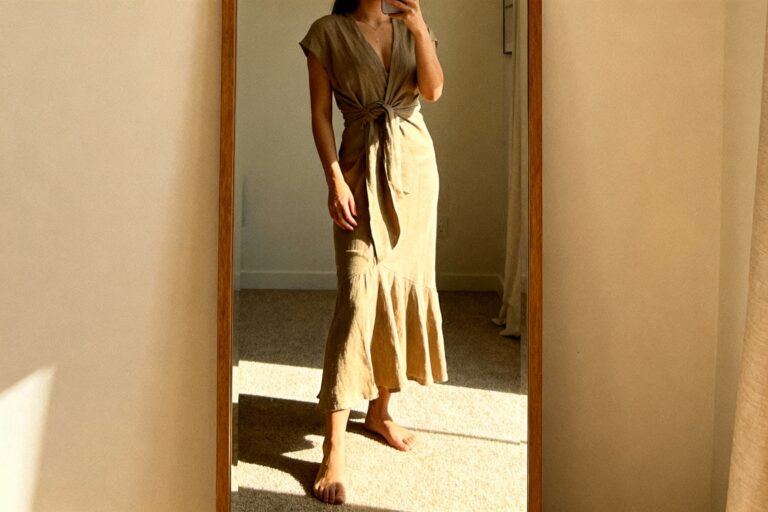
2. The Weekend Linen Set That Doesn’t Wrinkle Like Crazy
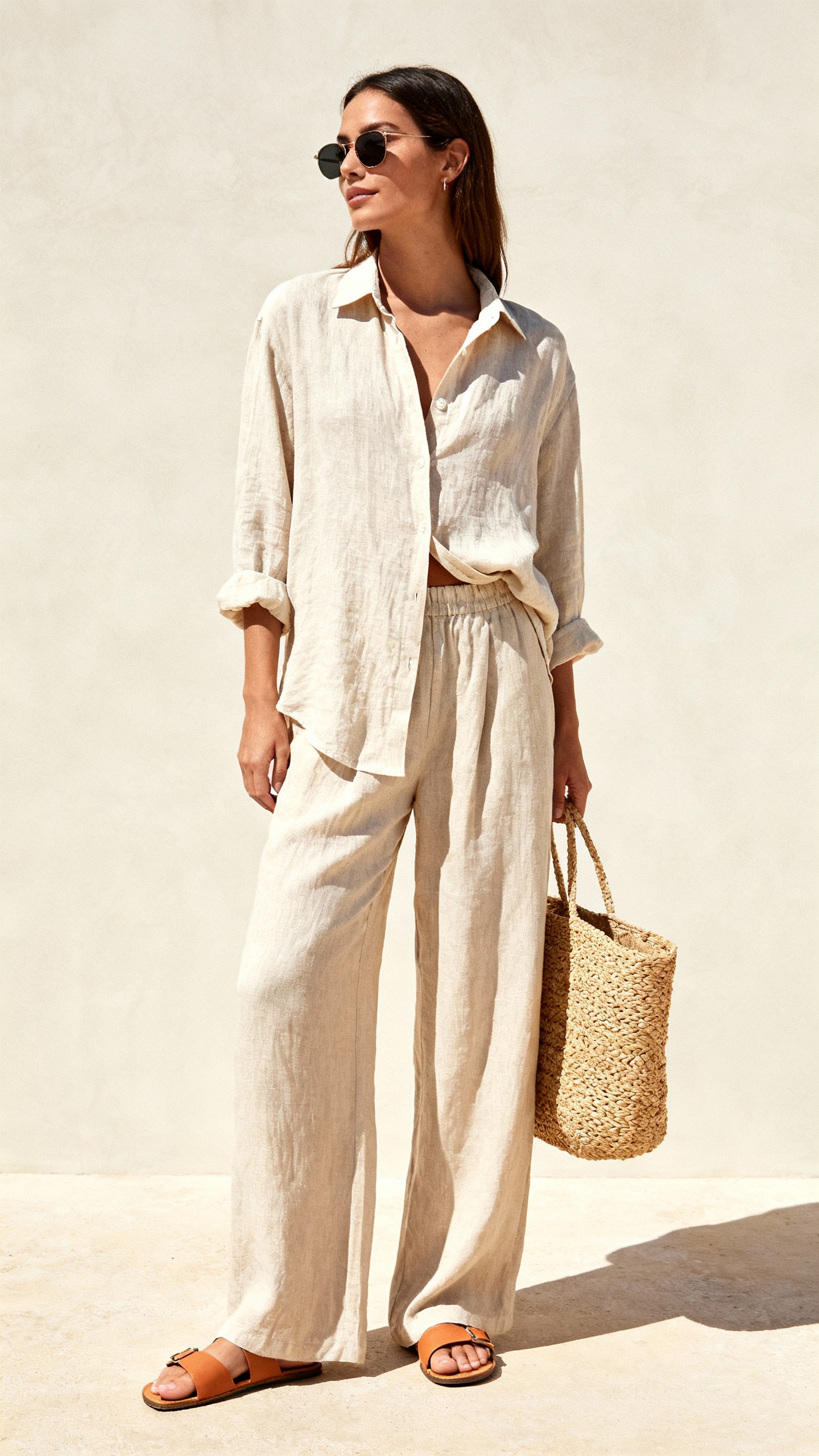
Linen gets a bad rep for wrinkles, but the right kind looks breezy and luxe, not crumpled and tired. This set proves you can do relaxed and chic with smart fabric choices. The trick? Weight, weave, and blends that soften the creases rather than spotlight them.
Outfit Pieces:
- Linen-blend shirt (ideally linen-cotton or linen-viscose)
- Matching linen-blend shorts or wide-leg pants
- Soft leather sandals
- Woven straw tote
- Minimalist sunglasses
Styling Tips:
- Feel the shirt: quality linen fibers are slightly slubby (that’s normal) but should feel cool and glidey, not scratchy. A linen blend often reduces harsh wrinkles and improves drape.
- Look at the weave. A plain weave linen with a consistent grid (no big irregular gaps) equals better durability and less sagging at the knees or elbows.
- Do the crush test: ball up a corner in your fist, count to three, release. Quality linen will wrinkle softly, not crease into sharp lines that hang on forever.
- Check hems and pockets: Are they reinforced? Loose corners and wavy stitching are a no. Flat, even hems mean the fabric and construction can handle wear.
- Pick a midweight fabric (not tissue-thin). If it’s too light, you’ll see pocket bags or underlayers. Midweight linen keeps the look polished.
Where to wear it: Brunch on a sunny patio, farmers’ market strolls, art fairs, and casual date nights. It’s relaxed but refined, and you’ll feel like you’re on vacation even if you’re just doing errands.
3. The Effortless Knit Dress That Doesn’t Sag
A knit dress can be your best friend—or your worst enemy. The right fabric hugs without clinging, keeps its shape, and feels soft against the skin. We’re aiming for a smooth, resilient knit that won’t bag out at the elbows or knees and won’t go fuzzy after two wears.
Outfit Pieces:
- Midweight ribbed knit dress (merino, cotton-modal, or viscose-nylon blend)
- Lightweight cardigan or cropped jacket
- Block-heel mules or crisp white sneakers
- Delicate pendant necklace and small hoop earrings
- Compact shoulder bag
Styling Tips:
- Check the recovery. Gently stretch a small section of the dress and let it go. Quality knits bounce back; poor knits stay wavy or loose.
- Read the tag. Natural fibers like merino or cotton blends feel luxe, but a touch of nylon or elastane adds resilience (think: no sagging at the seat).
- Run your fingers across the surface. Pills in-store? Red flag. A smooth, tight knit means less pilling later.
- Hold it up to the light. If you can see every outline through it, it’s too thin. Look for opacity with movement—comfortable but not sheer.
- Check side seams. If they twist or spiral on the hanger, they’ll twist on your body. Straight seams indicate better knitting and finishing.
Where to wear it: Dinner dates, office with a blazer, weekend coffee runs, or travel days when you want soft, stretchy comfort that still looks polished. It’s the definition of easy elegance.
4. The Luxe Silk Skirt and Cashmere Combo
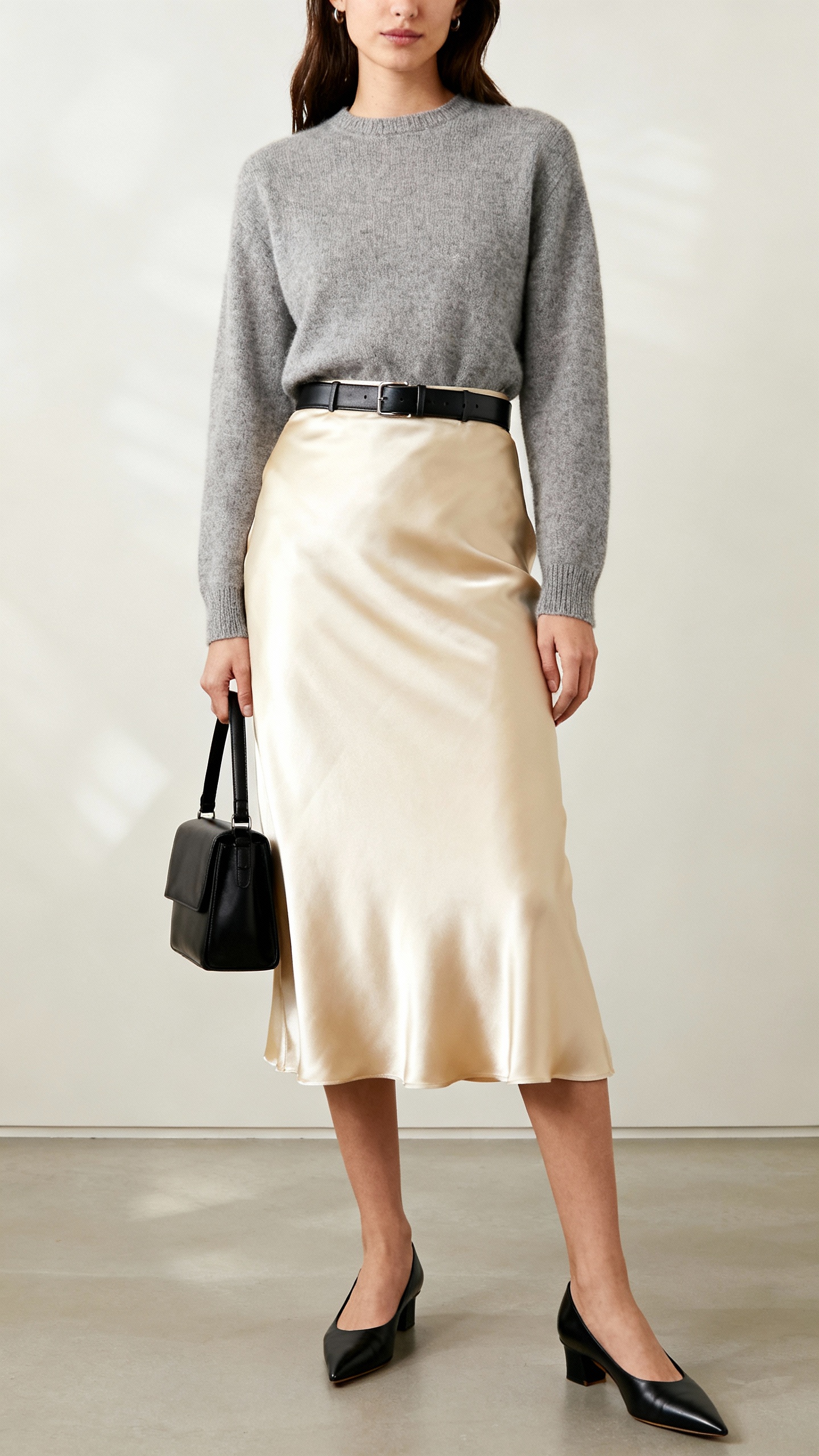
This outfit screams quiet luxury. A silk skirt with a subtle sheen plus a cashmere or cashmere-blend knit is a dream duo when it comes to fabric quality. You’ll see it in the glow, feel it in the softness, and notice it in how beautifully the pieces drape. Yes, it’s an investment—but spotting real quality means you’ll invest smart.
Outfit Pieces:
- Bias-cut silk or silk-satin midi skirt
- Cashmere or cashmere-blend crewneck sweater
- Pointed-toe flats or kitten heels
- Slim leather belt
- Structured mini tote
Styling Tips:
- Feel the silk: it should be cool to the touch with a liquid drape, not stiff or plastic-y. If it squeaks or feels sticky, it’s likely a lower-quality satin or synthetic.
- Check the sheen. Quality silk has a soft, pearl-like luster—not super shiny like a costume fabric. Move it in the light to see a subtle glow.
- For cashmere, lightly rub the surface. Excess fuzz or shedding is a warning sign. Long-staple cashmere feels smooth and dense for its weight.
- Look at the knit gauge. A fine, even knit with no thin patches means fewer holes and less distortion over time.
- Inspect waistband construction on the skirt. A clean, stable waistband that lies flat equals better wear. If the lining is present, it should be silky and breathable, not clingy.
Where to wear it: Anniversary dinners, cocktails, holiday parties, theater nights, or any time you want to feel intentionally elegant. It’s quiet but powerful—like a whispered compliment that sticks with you all night.
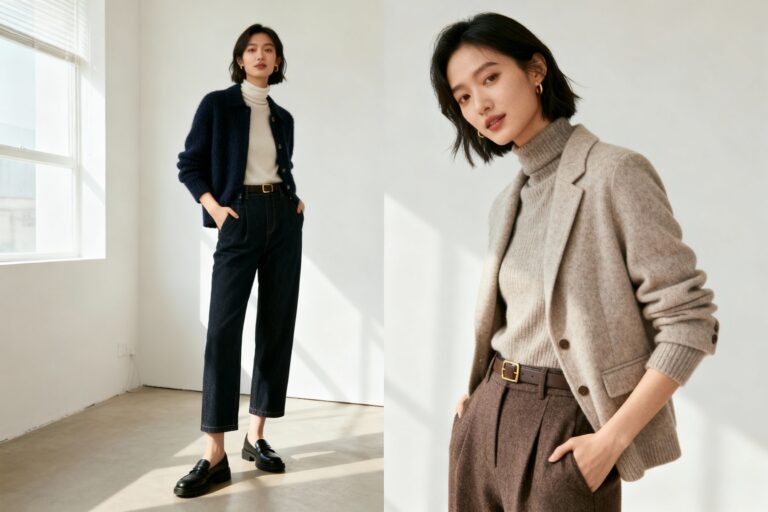
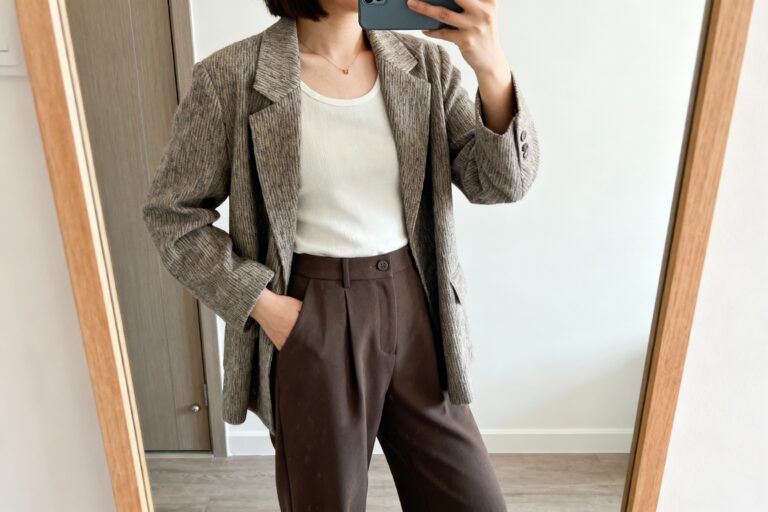
5. The Tailored Blazer and Denim Done Right
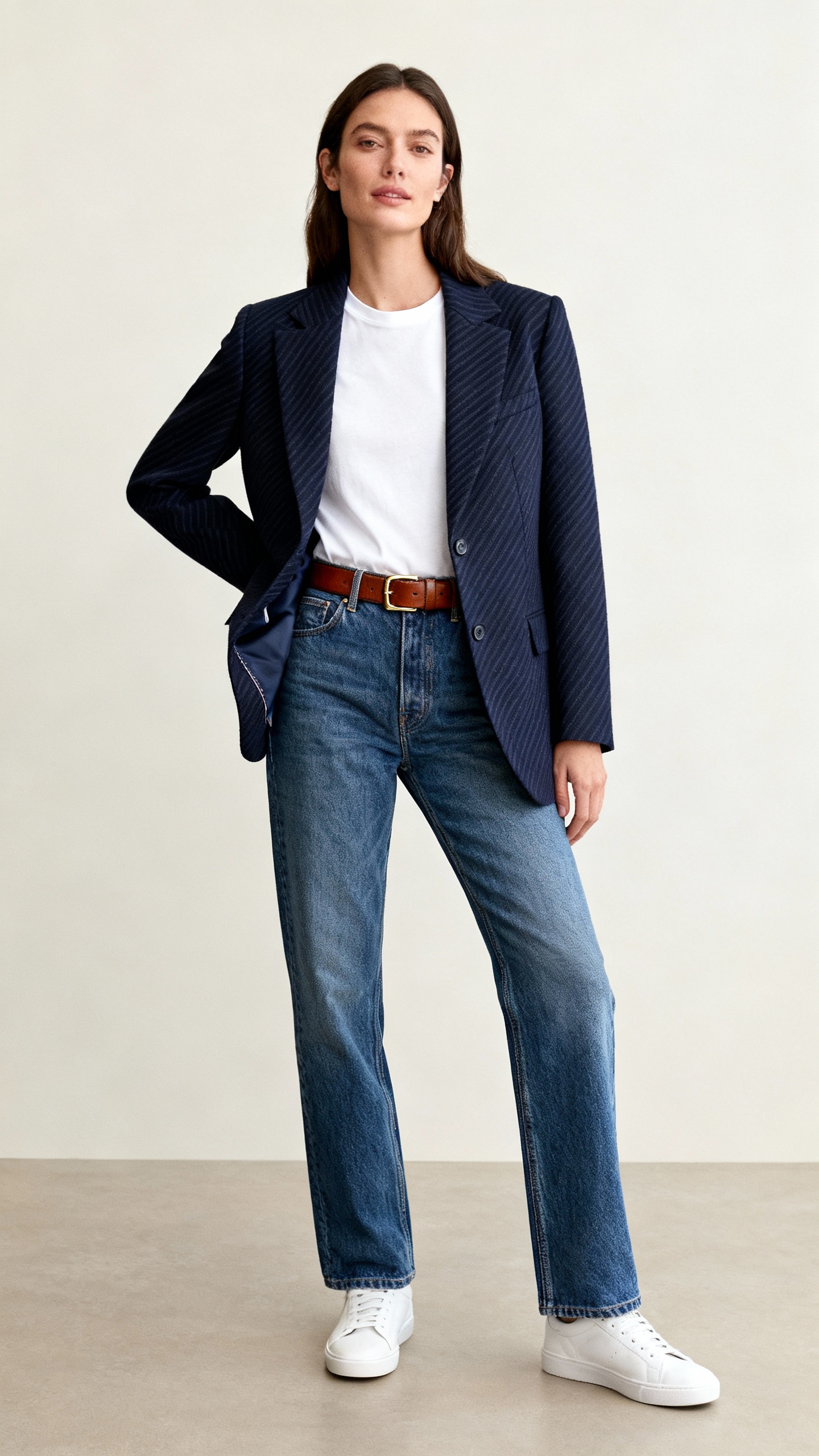
Nothing beats a sharp blazer and perfect jeans—especially when the fabrics are on point. We’re talking a blazer with structure and drape, plus denim that holds you without pinching. If you’re new to spotting quality, this duo is a perfect training ground.
Outfit Pieces:
- Tailored blazer in wool twill or a wool-blend suiting fabric
- High-rise straight-leg denim in rigid or comfort-stretch
- Cotton jersey tee or fine-knit tank
- Polished leather belt
- Clean sneakers or sleek slingbacks
Styling Tips:
- Blazer test: pinch the shoulder pad and lapel. Quality suiting has body without bulk; it should skim your frame and keep its shape. Feel the fabric—wool twill should be smooth with a faint diagonal texture.
- Flip the blazer inside out. Look for a full or partial lining that’s neat, with bound seams or clean finishing. Messy interiors scream shortcuts.
- For denim, check the weight. Heavier denim (think 11–14 oz) tends to last longer and hold shape. If it feels like paper or super thin, pass.
- Do the stretch-and-recovery test on jeans. If they’re stretch denim, pull the waistband gently. It should return without rippling.
- Examine hardware and stitching. Metal zips, solid buttons, and even stitches (no skipped lines) are tells of better construction. Chain-stitch hems on premium jeans are a nice sign too.
Where to wear it: Casual office days, networking events, coffee dates, and travel. It’s the uniform that pulls everything together without feeling try-hard. You’ll look crisp even after hours in transit—seriously.
Okay, now that we’ve had our fashion show-and-tell, let’s zoom out and get you truly fabric-savvy with a few quick-hit rules you can use every time you shop.
Quick Fabric-Spotting Playbook
- Touch and drape matter: Quality fabrics feel balanced for their type. Cotton shouldn’t feel papery, linen shouldn’t feel scratchy, and silk shouldn’t feel plasticky.
- Check opacity: Hold fabric up to the light. If it’s unintentionally sheer, expect visible lines and faster wear-out.
- Do the wrinkle test: Crush a small section in your fist. If the wrinkles vanish quickly, the fabric is likely higher quality or has better finishing.
- Read fiber content: Natural fibers (cotton, wool, silk, linen) feel luxurious, but blends can boost performance (think: durability, stretch, less wrinkling). Aim for thoughtful blends, not mystery cocktails.
- Inspect stitching: Straight, even seams with no loose threads. Reinforced stress points (pockets, waistbands, underarms) indicate someone cared.
- Mind the weave/knit: Tight, consistent weaves and stable knits resist pilling and sagging. Loose or patchy areas are a no.
- Beware of too-good shine: Overly shiny “silks” are often synthetics with a stiff hand. Look for a soft luster and flow.
- Feel the weight: Lightweight doesn’t mean cheap, but flimsy usually does. The fabric should match the garment’s purpose—dresses shouldn’t feel like tissue unless that’s the design.
- Lining love: Good linings are breathable and smooth, not sticky. They help clothes glide and hold structure.
- Trust your instincts: If it looks rumpled on the rack or scratchy to the touch, it’ll probably feel worse after a full day of wear.
Care Clues That Signal Quality
- Labels that explain care thoughtfully (not just “dry clean only” by default) often indicate better fiber choices and finishing.
- Pre-shrunk or sanforized cotton means fewer laundry surprises. If not stated, ask or size with shrinkage in mind.
- Cashmere or merino that suggests gentle care but doesn’t shed all over you in-store? Good sign.
- Denim with a note on weight or mill origin (e.g., Japanese or Italian) often points to craftsmanship.
One more thing: Price helps but isn’t everything. Plenty of mid-range pieces use great fabrics, and some pricey items cut corners. Your fingertips are your superpower. Touch the fabric, test the recovery, eyeball the stitching—suddenly, you’re the person your friends ask to approve their cart.
Final fit note: The best fabric still needs the right cut. Even the most luxurious wool won’t impress if the shoulders are drooping or the waistband digs. Balance materials with tailoring—alterations can elevate even simple pieces.
You’re ready. Next time you’re browsing, use these outfits as your blueprint and the quick tests as your cheat sheet. Seriously, once you start spotting quality fabric when shopping, you’ll build a wardrobe that looks better, lasts longer, and makes getting dressed feel effortless. Go touch those clothes and trust your instincts—you’ve got the eye now.